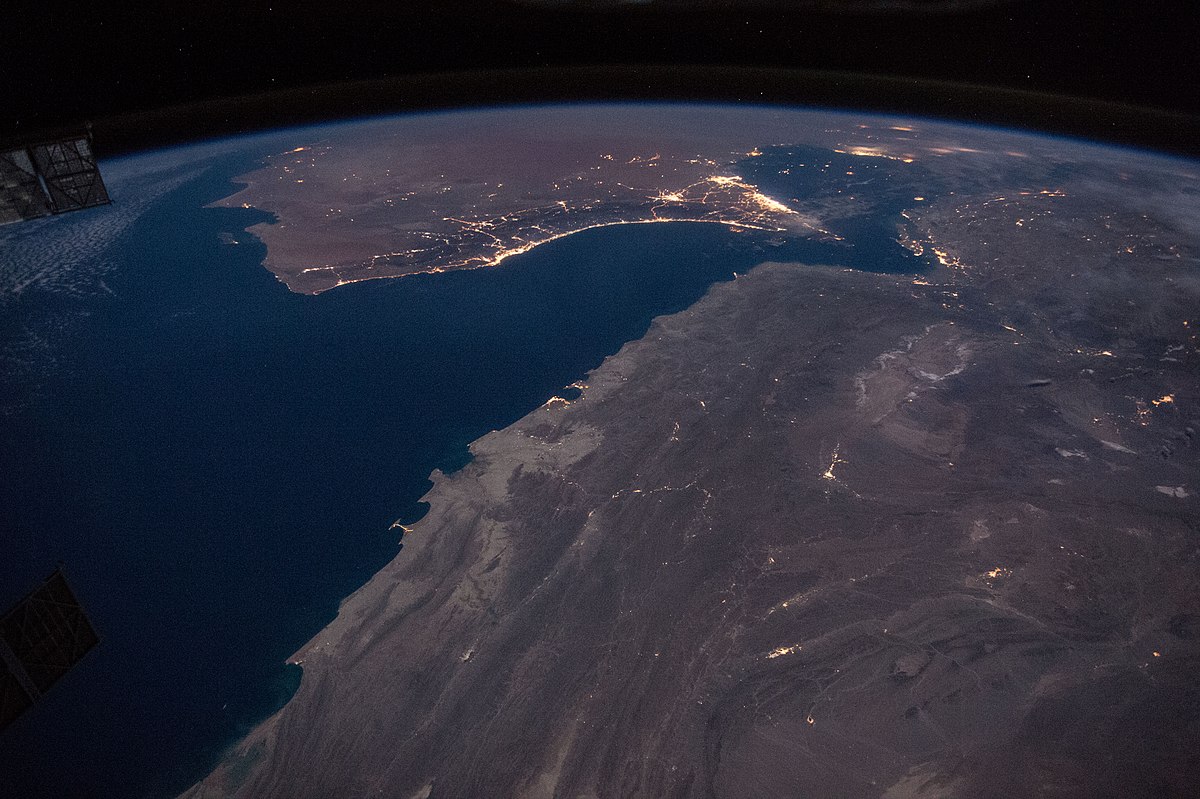
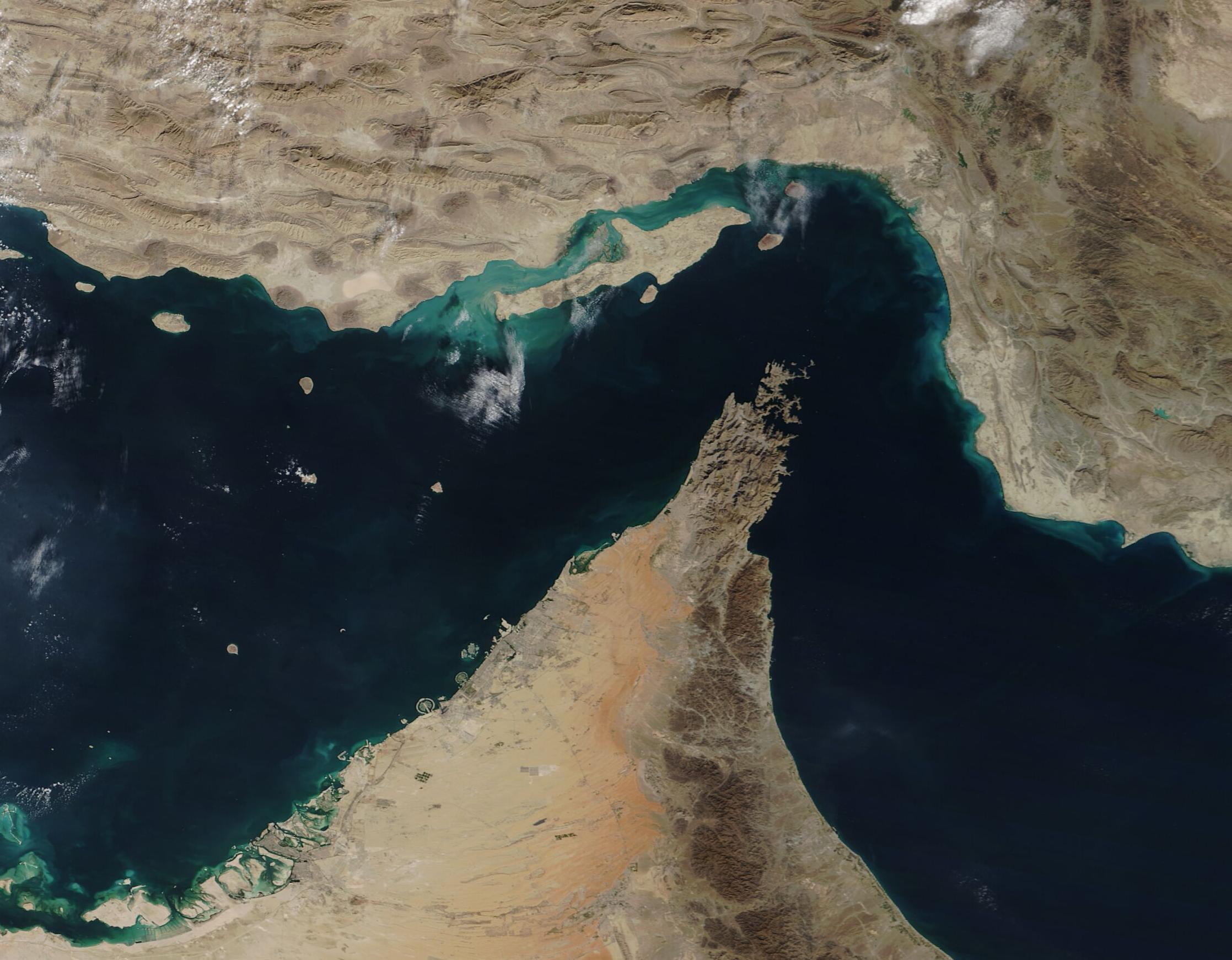
In the narrow channel between Qeshm Island and Larak Island — an obscure passage through Iranian territorial waters that most maritime charts barely annotate — something significant is happening. Ships are moving.
Not many ships. Not freely. Not without cost. But moving.
Iranian Revolutionary Guard personnel have established what shipping intelligence services are calling the Tehran Toll Booth. Vessels seeking passage through the Strait of Hormuz — the 21-mile-wide waterway that carries one-fifth of the world's oil and gas — are directed to this Iranian-controlled route, where IRGC officers verify the vessel's national affiliation, check that it does not have connections to the United States or Israel or their allies, and collect a fee. The fee is up to $2 million per voyage. It is payable in yuan.
Twenty-six vessels have now used this route. The Iranian parliament is moving to write the arrangement into law. And Iran's five-point counter-proposal to the American peace plan — delivered through Pakistani intermediaries last week — includes, as one of its five non-negotiable conditions, international recognition of Iranian sovereignty over the Strait of Hormuz.
This is the story that the oil price, the fertiliser shortage, and the famine risk have crowded out. It is, in some respects, the most important story of all. Because when the war ends — and it will end — everything else recovers. The oil price falls. The wells restart. Even the fertiliser supply eventually returns. But what Iran is building in the Qeshm-Larak channel may not go away at all.
The Anatomy of a Toll Booth
The mechanism is elegant in its simplicity. The Strait of Hormuz, at its narrowest, is 21 miles wide. Its main shipping lanes run through Iranian territorial waters on the northern side. Iran has always had the legal ability to regulate passage through those waters, even if it has historically chosen not to exercise it commercially.
Since early March, it has been exercising that ability with precision. Vessels from China, Russia, India, Iraq, and Pakistan — nations Iran considers non-belligerent — have been permitted passage after vetting. Iranian Foreign Minister Abbas Araghchi confirmed the system publicly: countries had approached Iran seeking safe passage, and it was ‘up to our military to decide.’
Vessels are directed to Iranian-controlled waters, where IRGC officers check national affiliation and collect a fee of up to $2 million per voyage — payable in yuan.
Japan is now in discussions. South Korea has been told it is a ‘non-hostile country.’ Turkey's transport minister confirmed a Turkish vessel was permitted through after Tehran gave permission. The Iranian lawmaker Alaeddin Boroujerdi told Iran International that the country had been ‘charging some vessels $2 million to pass through the strait. Now, because war has costs, naturally, we must do this.’
‘Naturally.’ That word is doing significant work. It is the word of a country that has decided this is permanent policy, not wartime improvisation.
The Legal Architecture Iran Is Building
The toll booth has a legislative foundation that is being poured in real time. The Iranian parliament is moving to formalise transit fees in law. This is not a battlefield arrangement being run by junior IRGC officers. It is a structured revenue system being institutionalised by a legislature.
The peace proposal Iran delivered to Washington — via Pakistan, reviewed by senior authorities in Tehran — makes the legal ambition explicit. One of Iran's five conditions for ending the war is ‘international recognition of Iranian sovereignty over the Strait of Hormuz.’ Not just Iranian rights in its territorial waters, which already exist under international maritime law. Sovereignty over the Strait itself.
This is a demand that, if met, would fundamentally alter the legal status of the world's most important energy corridor. The Strait of Hormuz is currently governed by the UN Convention on the Law of the Sea, which provides for the right of transit passage through international straits — a right that cannot be suspended even by the coastal state. Iran is seeking to replace that framework with one in which it has the authority to decide who passes, when, and at what price.
The Bilateral Deals That Are Fracturing the Coalition
The international response to Iran's closure of Hormuz has been, on the surface, impressively unified. Twenty-two countries signed a readiness statement. The UN Security Council passed Resolution 2817 with 13 votes. Bahrain has circulated a second draft authorising the use of force.
Beneath that surface, the coalition is quietly fracturing along the lines of energy dependency.
China — which receives 45 percent of its oil through Hormuz and has refused to sign the readiness statement — has been negotiating bilateral passage for its vessels since early March. India — which imports 85 to 90 percent of its crude oil — has deployed three warships to escort its own energy shipments and has already received Iranian permission for transit. Japan is in talks. South Korea has been told it is non-hostile.
The coalition is fracturing along the lines of energy dependency. Each bilateral carve-out reduces Iran's incentive to reopen the strait fully and creates a precedent for selective access as the new normal.
Each of these bilateral carve-outs does two things simultaneously. It reduces the immediate pain for the country that secures it — and it reduces Iran's incentive to reopen the strait fully to everyone. Why open Hormuz for free when you can charge for selective access and extract political concessions from each supplicant?
What the Insurance Market Is Telling You
The financial market most directly exposed to the long-term reality is the maritime insurance market, which is, by its nature, forced to price the actual future rather than the hoped-for one.
War-risk premiums have risen approximately twelvefold. For a Very Large Crude Carrier, the cost of transit insurance has moved to between $10 million and $14 million per voyage. Ships are not absent from the Strait because they cannot get cover. They are absent because the economics do not work at those premiums.
Add the toll booth fee — up to $2 million per VLCC voyage — to the insurance premium of $10 to $14 million, and the cost of moving Gulf oil to Asia has increased by $12 to $16 million per voyage. On a VLCC carrying 2 million barrels, that is a per-barrel cost increase of $6 to $8 — just in voyage costs, before the oil price itself is counted.
This cost increase does not go away when the war ends. The toll booth will still be there. The insurance premium will still be elevated. The cost structure of Gulf energy has permanently changed.
A Permanent Restructuring, Not a Temporary Shock
The framing of this crisis as a supply disruption — temporary, quantifiable, recoverable — misses what is actually being constructed. Iran is not simply blocking a waterway. It is building the institutional, legal, and financial infrastructure for a new relationship between the Persian Gulf and the rest of the world.
Larry Fink of BlackRock described two extreme outcomes. But there is a third, more probable scenario that sits between his poles: a nominal ceasefire that removes the most acute military threat but leaves the toll booth operational, the insurance premium elevated, the LNG capacity permanently reduced, and Iran's legislative claim to Strait sovereignty unresolved.
There is a third scenario: a nominal ceasefire that removes the acute military threat but leaves the toll booth operational and the question of sovereignty unresolved. Normal is not available.
The Strait will open again. The question is what it will look like when it does.
What Happened Yesterday
The Strait of Hormuz remains closed to most commercial traffic as of 28 March. Yesterday, IRGC forces turned away three container ships attempting passage. A vessel called the Mayuree Naree ran aground on Qeshm Island — the same island from which the toll booth operates. The IRGC Navy commander who personally posted on social media which ships were permitted to transit was killed in an Israeli airstrike on Wednesday night.
US Central Command reports that 92 percent of Iran's large naval vessels have been destroyed and that drone and missile launch rates are down by more than 90 percent. What has not been degraded is the mine stockpile, the midget submarine fleet, the institutional framework of the toll booth, and the legislative process writing it into law.
Source Notes
Tehran Toll Booth: Fortune 26 Mar; Al Jazeera 26 Mar; Argus Media 26 Mar; Lloyd's List Intelligence (26 vessels confirmed); Boroujerdi/Iran International
Iran 5-point peace proposal / sovereignty demand: NPR 25 Mar; Al Jazeera 25 Mar; CNBC 25 Mar; NBC News liveblog 26 Mar
Bilateral passage deals: Al Jazeera 16 Mar; Soufan Center 23 Mar; Euronews (Japan/Trump/Takaichi)
Insurance repricing: LMA statement 23 Mar; Lloyd's CEO Patrick Tiernan Bloomberg TV 19 Mar; Stimson Center analysis
CENTCOM 92% figure: Fox News liveblog 25 Mar (Admiral Brad Cooper statement)
Mayuree Naree / 3 ships turned back: Wikipedia / Hormuz crisis (updated 28 Mar); Tangsiri killed: Al Jazeera, CNBC, Jerusalem Post — all 26 Mar
Full source index: see References page