Jet fuel is a kerosene derivative — a middle distillate product that refineries produce alongside diesel and heating oil. The Gulf states, particularly the UAE and Kuwait, are among the world's largest jet fuel exporters. A very large proportion of globally traded aviation fuel begins its journey in a Gulf refinery and moves through the Strait of Hormuz.
Since 1 March 2026, it has not been moving.
The numbers are stark. The Hormuz closure has removed between 35 and 40 percent of all globally traded jet fuel from the market simultaneously. This is not a 5 percent swing in supply that futures markets can absorb with a modest price adjustment. It is a structural removal of more than a third of global aviation fuel trade during a period when alternative supply chains cannot quickly scale to compensate.
The Price Signal Nobody Wanted
Jet fuel spot prices have approximately doubled since the closure began. That figure — a 100 percent rise in four weeks — has no precedent in the history of commercial aviation. The oil shocks of the 1970s, the post-9/11 disruption, the COVID-era demand collapse and subsequent rebound: none of them produced a supply shock of this speed and magnitude for aviation fuel specifically.
Airlines hedge their fuel costs, typically three to eighteen months forward. Those hedges are now the only thing standing between several major carriers and immediate financial distress. Airlines with strong hedge books — Delta, Lufthansa, Singapore Airlines — are absorbing the current market price in hedged positions. Airlines that hedged less aggressively, or that have shorter hedge horizons, are facing spot market exposure at double the price they budgeted.
The jet fuel spot price has doubled in four weeks. No airline fuel hedge programme was designed to survive this. The hedges buy time — not immunity.
When hedges roll off — and they will roll off, because hedges are time-limited instruments — the full market price hits the airline's cost base. For most carriers, that point arrives sometime in the second half of 2026. At current spot prices, the fuel cost of operating long-haul aviation is simply not commercially viable at pre-crisis ticket prices.
Dubai and the Empty Hub
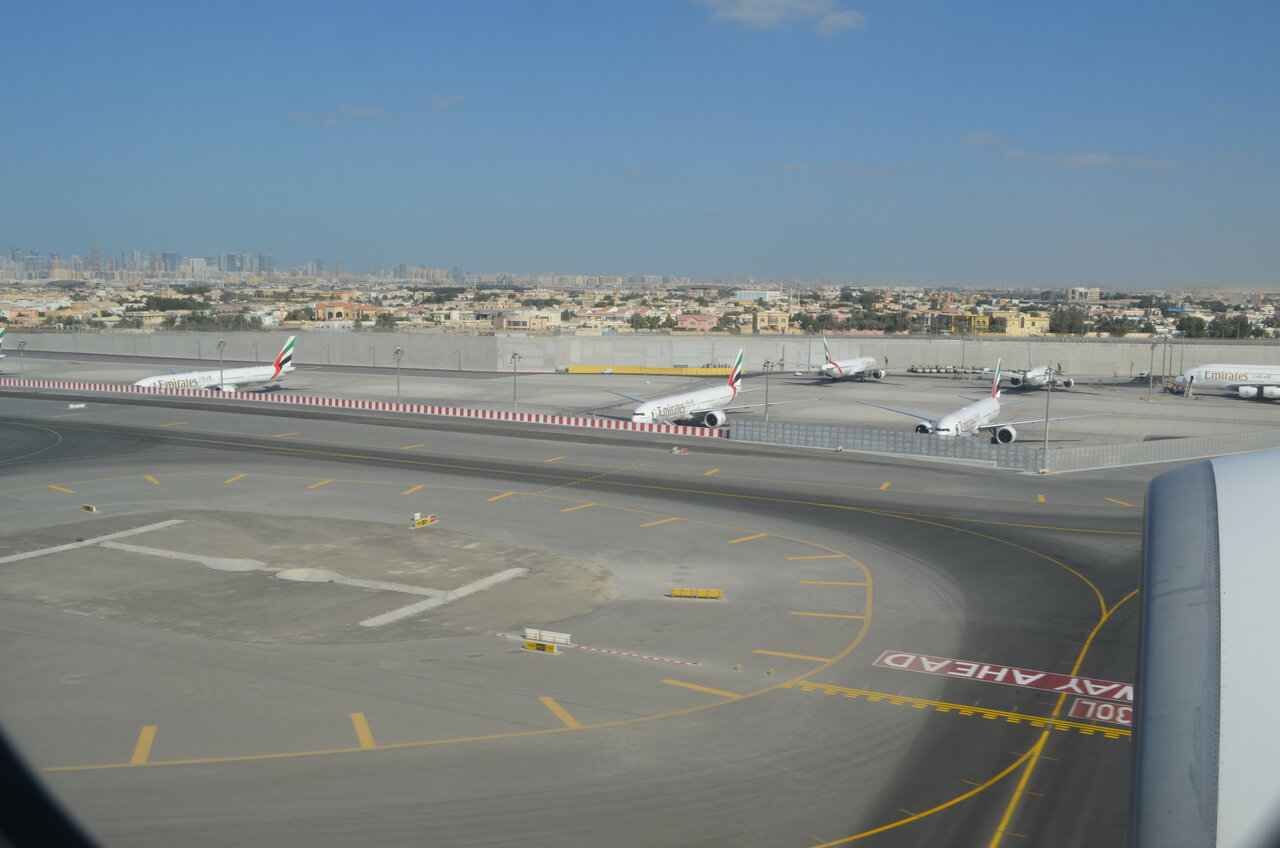
Dubai International Airport is the world's busiest international airport by passenger numbers — or was. It processed more than 86 million passengers in 2024. It is the geographic centrepiece of the Emirates airline network and the primary transit hub for flights connecting Europe, Africa, South Asia, and the Far East through the Middle East corridor.
That corridor is now effectively closed.
War-risk insurance for flights operating near or through the Gulf airspace has risen to between $36,000 and $120,000 per round trip, depending on routing and aircraft type. Many insurers have simply withdrawn cover entirely for routes overflying certain Gulf zones. Airlines cannot operate into an uninsurable airspace without assuming liability exposure that their boards will not approve.
Emirates has suspended the majority of its network. Flights that previously routed through Dubai are being rerouted over Central Asia, the Indian subcontinent's southern approaches, or — in some cases — the long way around via Africa. These reroutings add hours to journey times and thousands of dollars to fuel costs per sector.
Dubai International is running at an estimated 15 to 20 percent of pre-crisis throughput. The connecting passenger traffic that fed the Emirates hub-and-spoke model — the business that made Emirates one of the world's most profitable airlines — has largely ceased.
Air Cargo: The Supply Chain Nobody Noticed Until Now
The passenger disruption is visible. The cargo disruption is less visible and, in some respects, more consequential.
Air cargo rates from Asia to Europe have risen approximately 70 percent since the closure. The Gulf corridor — which carries not just passenger baggage but high-value, time-sensitive freight including electronics, pharmaceuticals, fresh produce, and industrial components — has been severely disrupted. Cargo that previously transited Dubai is now diverting to Doha (partially), Istanbul, or being placed on ocean freight with all the additional lead time that implies.
The pharmaceutical supply chain is particularly exposed. A significant fraction of the world's generic medicines are manufactured in South Asia and shipped to Europe and the Americas via Gulf transit. The disruption to that supply chain is not yet visible in hospital dispensaries — there is stock in the pipeline — but if the closure continues beyond three months, supply constraints in specific medicine categories become a clinical as well as a commercial problem.
Air cargo rates from Asia to Europe have risen 70 percent. The pharmaceutical, electronics, and fresh produce supply chains that relied on Gulf routing are in varying degrees of distress.
The Rerouting That Will Outlast the Crisis
Airlines and cargo operators that have been forced to build new routes, negotiate new landing rights, reconfigure their crew bases, and rebuild their network logic around the Gulf closure will not simply dismantle that work when the conflict ends. Alternative routing has a capital cost. That capital, once spent, creates an incentive to continue using the routes.
This is the aviation parallel to the supply chain rewiring happening in every other sector. Istanbul, which has become a beneficiary of diverted transit traffic, will retain some of that business permanently. Cargo operators who have built relationships with Central Asian logistics networks will maintain those relationships. The Gulf aviation hub model — Dubai, Abu Dhabi, Doha as global connecting nodes — will eventually recover, but it will recover into a more competitive landscape than the one it left.
The Ticket Price That Is Coming
The travelling public has not yet felt the full price impact. Airline hedges are absorbing much of the fuel cost increase. Route changes have added journey times but most carriers are absorbing that through schedule adjustments rather than ticket surcharges.
That is temporary. When hedges roll off, the cost has to go somewhere. Either airlines raise fares, reduce capacity, or accept losses that eventually force consolidation. History suggests all three happen simultaneously. The wave of ticket price increases that will reach consumers later in 2026 will not come with a clear label saying ‘Hormuz Crisis surcharge.’ They will arrive as general fare increases, capacity reductions on some routes, and the quiet disappearance of some of the cheap long-haul options that passengers have grown used to.
Source Notes
Jet fuel supply disruption figures: IEA Oil Market Report (March 2026); S&P Global Platts
War-risk aviation insurance: Aviation Week; Marsh McLennan war risk desk
Dubai Airport capacity: IATA operational data; Emirates press statements
Air cargo rate data: Xeneta; TAC Index (March 2026)
Airline hedging exposure: Bloomberg Intelligence; airline Q4 2025 earnings disclosures
Full source index: see References page